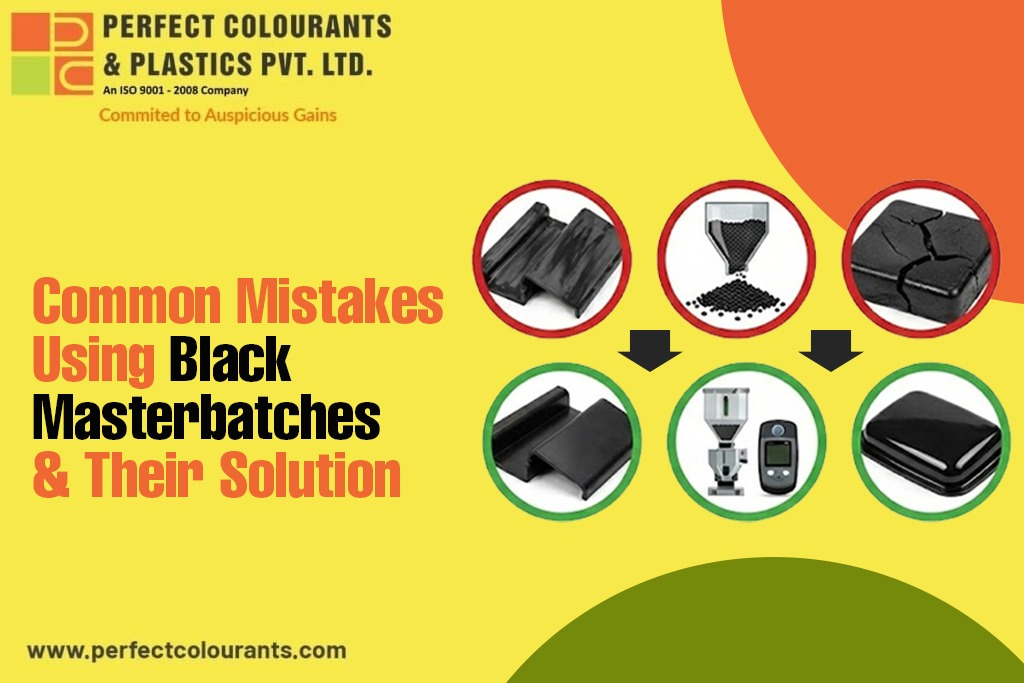
Common Mistakes Using Black Masterbatches & Their Solution
Black masterbatch is one of the most popular & extensively used masterbatches in the plastic industry. High-jetness and deep black colour, along with superior UV resistance, make black MB a cost-effective colouring solution for plastics across different industries. However, achieving the right level of black intensity and consistency can be a challenge for many. In this blog, we discuss the common mistakes most manufacturers make while using black masterbatches and how to solve them for successful & efficient processing.
Tackling Black Masterbatch Issues to Ensure Performance & Functionality
Using black masterbatch optimally ensures superior performance and aesthetics in end products. Plastic manufacturers often make mistakes related to shade consistency, colour intensity, pigment dispersion, processing techniques and compatibility issues. At Perfect Colourants & Plastics Pvt.Ltd, as one of the leading black masterbatch manufacturers in India, we emphasize addressing these issues to ensure optimal processing results.
Common Mistakes Using Black Masterbatches & Their Solution
Issue 1: Poor Black Colour Strength
In black plastic products, the black jetness and richness are what make the end product stand out. However, when the end product appears translucent or grey, it means the pigment concentration in the mixture is improper.
Cause: The ratio of carbon black pigment in the masterbatch is lower than the let-down ratio (LDR).
Solution: Switch to PPCPL’s highly concentrated black masterbatches with a higher carbon black loading. This ensures using lower LDR while also achieving superior jetness & intensity.
Also Read: Choosing the Right Carbon Black Masterbatch
Issue 2: Inconsistent Blackness Across Batches
For high-end applications like automotive or consumer goods, achieving consistent shade is pivotal. Even minor shade variations with unwanted undertones can significantly impact product quality.
Cause: The base carbon black pigment’s inherent colour undertone.
Solution: Changing the specific grade of carbon black used in masterbatch formulation.
Issue 3: Poor Dispersion
Poor dispersion of black MB in the matrix is one of the most common issues that leads to functional defects in plastic products. This often leads to visible streaks that impact the aesthetic appeal and overall integrity of the end product.
Cause: When carbon black particles are not properly deagglomerated, wetted and stabilized in the carrier resin during processing.
Solution: Choosing a carbon black grade that is compatible with the carrier resin and dispersion system matches the end-use polymer.
Issue 4: Colour Streaking
In plastic manufacturing processes like molding and extrusion, colour streaking occurs when MB fails to uniformly mix with the polymer system.
Cause: The Melt Flow Index (MFI) of the black masterbatch carrier resin is not compatible with the polymer MFI. This indicated that while one material melts and flows much quicker than the other, leading to an inconsistent distribution of colour.
Solution: The black masterbatch manufacturer in India must adjust formulation by carefully choosing the carrier resin with MFI similar to that of the host polymer. This ensures technical alignment and precise melt consistency.
Precisely Formulated Black Masterbatches by PCPPL
At PCPPL, as India's largest masterbatch manufacturer, we focus on material science and formulation precision to avoid these issues. This allows us to produce deep black and flawless MBs that are technically superior and compatible with host polymer systems. We use the highest quality of carbon blacks to provide customers to pick from black shade card the desired level of jetness. To discuss your masterbatch requirements, give us a call.
Also Check: Exploring Black Masterbatch and Its Benefits!