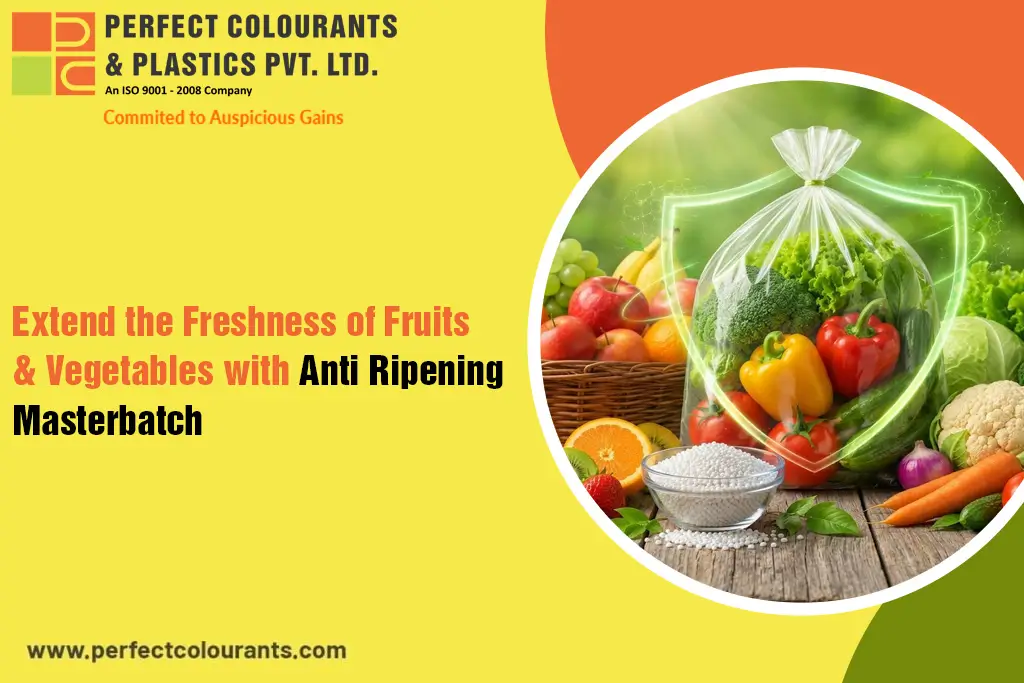
Extend the Freshness of Fruits & Vegetables with Anti Ripening Masterbatch
Every year, around one-third of the world’s food produced is either lost or wasted. These figures are even worse for fresh fruits, vegetables and flowers that have limited time the moment they leave the farm. The journey from the field to the consumer shelf is a race against a silent and invisible enemy: ethylene gas. Ethylene is a natural plant hormone. As the produce ripens, it releases this gas into the surrounding atmosphere. But inside sealed plastic packaging materials like bags, stretch films, pouches and trays, it accumulates. The more ethylene, the faster the nearby produce ripens, which releases even more ethylene. This cycle turns fresh shipments into soft, discoloured waste even before they reach the customers.
This is when Perfect Colourants & Plastics Pvt.Ltd. anti ripening masterbatch comes to the rescue by controlling ethylene in the plastic films.
Understanding the Fresh Produce Ripening Mechanism
Ripening is a natural process that involves changes in colour, texture, aroma and nutritional composition of produce. At its core, ethylene acts as a biochemical trigger that initiates and accelerates these changes across fruit and vegetable tissues. Ethylene is both the cause and the trigger. Even a small accumulation inside a sealed package is enough to trigger a ripening cascade that affects the entire batch. Breaking this cascade before ethylene accumulates is the most effective solution. This is exactly what PCPPL, the leading anti ripening masterbatch manufacturer in India, aims to achieve with our innovative MB.
What is Anti Ripening Masterbatch?
An anti ripening masterbatch is a specialized additive that is compounded into packaging films during production. Unlike sachets or separate ethylene absorbers placed inside plastic packaging, masterbatch producers in India integrate this additive into plastic production, making the packaging uniformly active across its entire surface.
PCPPL’s anti ripening masterbatch is engineered to regulate the internal atmosphere within the packaging film by actively scavenging ethylene. This delays the natural ripening process, preserving freshness, appearance, texture and nutritional value.
How Anti Ripening Masterbatch Work?
The science behind PCPPL’s anti ripening masterbatch centres around active ethylene scavenging. Once the masterbatch is compounded into a film and the package is sealed, the active compounds continuously interact with ethylene molecules.
- Ethylene Emission: Fresh produce inside plastic packaging releases ethylene as part of its normal biological process. This gas accumulates inside the sealed package.
- Diffusion to Film Wall: Ethylene molecules migrate through the package atmosphere and come in contact with the inner surface of the packaging film containing the anti ripening additive masterbatch.
- Catalytic Reaction: The active component in the MB traps and neutralises ethylene molecules through a catalytic reaction, converting ethylene before it can accumulate to ripening-triggering concentrations.
- Dual Preservation Effect: Ethylene removal delays ripening. Additionally, the reaction byproduct exhibits antifungal properties, which also protect against mould growth.
- Continuous Protection: The scavenging action continues through storage and transit period. This provides sustained freshness protection across all batches of packaging materials.
What are the Key Benefits of Anti Ripening Masterbatch?
- Extended Shelf Life: Significantly delays premature ripening, keeping packed produce fresh for a longer period during storage and transit.
- Longer Transit Window: Enables longer distance distribution without quality loss, opening up export markets and intra-state trade opportunities.
- Reduced Food Waste: Less premature spoilage means lower rejection rates at retail and less wastage.
- Seamless Film Integration: It can be used for LDPE, LLDPE, HDPE and PP films with no additional step or process required.
Where Anti Ripening Masterbatch Can Be Used?
As a trusted anti ripening masterbatch supplier in India, our MB is compatible with a wide range of packaging films across the supply chain.
| Application | Film Type | Ideal For |
| Pallet stretch film | LLDPE / LDPE stretch film | Bulk shipments, export pallets, inter-warehouse transport |
| Pallet liners | LDPE flat liner film | Controlled-atmosphere transit of bulk produce |
| Produce bags & pouches | LLDPE / LDPE blown film | Grapes, salads, pre-cut fruits, leafy greens |
| Shrink wrap films | POF/shrink film | Bundled produce, mixed trays, retail display packs |
| Punnet & tray overwrap | PP / PE overwrap film | Berries, cherry tomatoes, mushrooms, cut produce |
| Clamshell liners | PP/PET rigid liner | Strawberries, raspberries, blueberries |
| Ventilated farm bags | HDPE/PP perforated film | Onions, potatoes, root vegetables |
| Agricultural packaging films | LDPE multilayer film | Post-harvest packaging at farm level before cold storage |
Want to Extend Freshness of Your Packaging Films?
Get in touch with PCPPL’s team to let us know your packaging film requirements and explore how our anti ripening masterbatch can be integrated into your packaging film.